Quick Answer
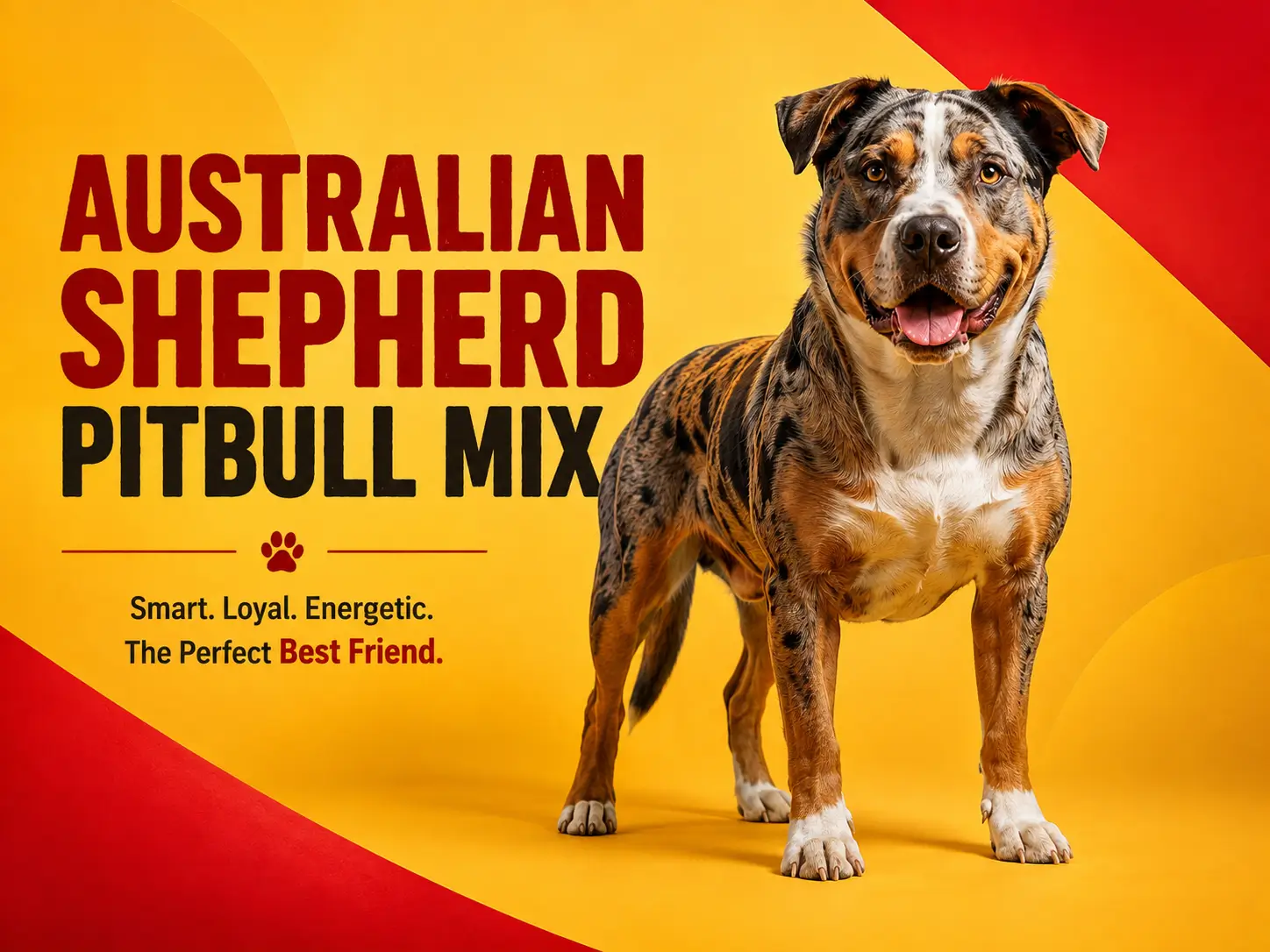
An Australian Shepherd Pitbull mix — commonly called an Aussie Pit — crosses an Australian Shepherd with an American Pit Bull Terrier or American Staffordshire Terrier. Expect a 35–65 lb, 18–23 inch dog with a 10–15 year lifespan, high intelligence, and a strong drive to work, herd, or play for 1–2+ hours daily.
This Guide For:
This guide is built for prospective owners weighing an Aussie Pit against other high-energy mixes before adopting — especially renters and buyers in cities with breed restrictions — and for current owners building a realistic training and health plan. A puppy from a breeder typically runs $400–$2,000+; shelter and breed-specific rescue adoption fees are usually $50–$300.
Before bringing one home, always check your local and landlord breed policies — Pit Bull–type dogs are the most common target of breed-specific legislation in the U.S., and this affects an Aussie Pit even though it’s a mixed breed.
What is an Australian Shepherd Pitbull Mix?
An Australian Shepherd Pitbull mix, or Aussie Pit, is a first-generation cross between an Australian Shepherd — a medium-sized American herding breed despite its name — and a Pit Bull–type dog, most often an American Pit Bull Terrier or American Staffordshire Terrier.
“Pit Bull” isn’t a single AKC-recognized breed; it’s an umbrella term for several muscular terrier-type breeds that share ancestry with 19th-century English bull-baiting and terrier stock.
Because it’s a first-generation cross of two structurally different parents, puppies in the same litter can vary widely — some lean toward the Australian Shepherd’s leaner herding build and merle coat, others toward the Pit Bull’s broader chest and short coat.
Temperament — What the Data Actually Shows
Most Aussie Pit guides repeat that both parent breeds “can be aggressive” without pointing to any evidence. The American Temperament Test Society (ATTS) — the nonprofit that has standardized-tested tens of thousands of dogs across breeds since the 1970s — publishes exactly this data, and it tells a different story:
| Breed | ATTS Pass Rate |
|---|---|
| American Pit Bull Terrier | 87.4% |
| Golden Retriever | 85.9% |
| Border Collie | 83.1% |
| Australian Shepherd | ~85% (varies by test year) |
| Average, all breeds tested | ~84% |
Source: ATTS Breed Statistics, most recent published data.
Both parent breeds score at or above the average across all tested breeds. The American Veterinary Medical Association also opposes breed-specific bans, citing evidence that a dog’s individual history, socialization, and handling predict behavior far better than breed alone.
That doesn’t mean an Aussie Pit is a beginner’s dog — it means the risk comes from under-exercising and under-socializing a smart, strong, high-drive dog, not from its genetics.
In my own experience raising Australian Shepherd–cross dogs through multiple puppy-to-senior life cycles for Aussiedoodle.net, that Australian Shepherd side is the half I can speak to directly: the same eye-contact herding stare and heel-nipping instinct I’ve watched show up in my own dogs around toddlers and other pets is the trait Aussie Pit owners report most often, too.
It’s a herding reflex, not aggression, and it responds well to redirection training started early.
Exercise & Training Needs
Aussie Pits need real physical and mental work — plan on 60–90+ minutes of active exercise daily (running, structured play, or a job like agility or obstacle work), not just a leash walk around the block. Both parent lines were bred to work, and an under-exercised Aussie Pit is far more likely to develop destructive chewing, excessive barking, or fence-jumping than to develop aggression.
Because both parents are intelligent and strong-willed, reward-based training started before 16 weeks old works better than correction-based methods — the same principle behind the AVSAB’s reward-based training position that shapes our Aussiedoodle behavior training guide, which covers the same herding-breed redirection techniques an Aussie Pit owner will need.
Health & Lifespan
Aussie Pits typically live 10–15 years. As a first-generation cross, they usually benefit from some hybrid vigor, but they can still inherit conditions common to either parent:
| Condition | Inherited From | What to Watch For |
|---|---|---|
| Hip/elbow dysplasia | Both parents | Limping, stiffness after rest, reluctance to jump |
| Hypothyroidism | Australian Shepherd | Weight gain, lethargy, coat thinning |
| Allergies/skin issues | Pit Bull side | Chronic ear infections, paw licking, hot spots |
| Cerebellar ataxia | Australian Shepherd | Uncoordinated movement, usually visible by puppyhood |
Ask any breeder for OFA (Orthopedic Foundation for Animals) hip and elbow certifications on both parents — this is the single best health screen available for a mixed breed at this size.
Track growth against breed averages using our Puppy Growth & Adult Size Calculator, and run new symptoms through our Health Risk & Symptom Checker before assuming the worst.
Cost: Buying vs. Adopting
| Source | Typical Cost | Notes |
|---|---|---|
| Backyard/casual breeder | $400–$800 | Rarely includes health testing |
| Reputable breeder | $800–$2,000+ | Should include OFA/health clearances on parents |
| Shelter | $50–$150 | Often includes spay/neuter and first vaccines |
| Breed-specific rescue | $150–$300 | Frequently has foster-home behavior notes already |
First-year costs beyond the puppy itself — food, vaccines, spay/neuter, crate, basic gear — typically run $1,000–$1,500 on top of the purchase or adoption fee. Pit Bull–type dogs are heavily overrepresented in U.S. shelters, so adoption is often the fastest and most affordable route to an Aussie Pit specifically.
Is an Aussie Pit Right for Your Household?
This mix fits best with:
Active singles or families with older kids, owners who can commit to daily structured exercise, and households without breed restrictions in their lease or local ordinance.
It fits worst with:
First-time dog owners with little training experience, low-activity households, or renters who haven’t confirmed their landlord’s pet policy — because Pit Bull–type dogs are the most commonly named breed group in U.S. breed-specific legislation, an Aussie Pit can be affected by local bans even though it’s a mixed breed. Always check municipal code and your lease before committing.
Key Takeaways
- An Aussie Pit is a first-generation Australian Shepherd × Pit Bull–type cross, typically 35–65 lbs with a 10–15 year lifespan.
- ATTS temperament data shows both parent breeds pass standardized testing at or above the all-breed average — aggression correlates with training and socialization, not breed.
- Expect 60–90+ minutes of daily exercise; under-exercise, not genetics, is the main behavior risk.
- Puppies run $400–$2,000+ from breeders; shelter and rescue adoption is typically $50–$300 and far more available for this specific mix.
- Check local breed-specific legislation and landlord pet policies before adopting — Pit Bull–type dogs are the most commonly restricted breed group in the U.S.
FAQs
Are Australian Shepherd Pitbull mixes aggressive?
No — ATTS temperament testing shows both parent breeds pass at or above the average rate across all tested breeds. Aggression in any dog is driven far more by socialization, training, and individual history than by breed.
Is an Aussie Pit still a good choice in 2026 given breed-specific legislation?
Yes, as a family dog — but check local and landlord rules first. Because it carries Pit Bull ancestry, an Aussie Pit can be affected by breed bans in some cities even though it’s technically a mixed breed, so confirm your specific municipal code before adopting.
How does an Aussie Pit compare to a purebred Australian Shepherd or Pit Bull?
It generally sits between the two: less intense herding drive than a purebred Australian Shepherd, less raw muscle mass than a purebred Pit Bull, but the same need for daily exercise and early training as both parents.
How much does an Australian Shepherd Pitbull mix cost, all-in?
Breeder puppies run $400–$2,000+; shelter or rescue adoption is usually $50–$300. Add roughly $1,000–$1,500 for first-year food, vaccines, spay/neuter, and gear.
Why does my Aussie Pit nip at heels or stare intensely at kids and pets?
That’s the Australian Shepherd herding instinct, not aggression — it’s an eye-and-nip pattern bred for moving livestock. Early redirection training (teaching a “leave it” or recall the moment the stare starts) resolves it in most dogs.
Is an Aussie Pit good with kids and other pets?
Yes, with early socialization — most do well with older children who understand not to overwhelm a herding-instinct dog, and can live peacefully with other pets when raised together, though some individuals prefer being the only dog in the home.
How big does an Australian Shepherd Pitbull mix get?
Most adults reach 18–23 inches at the shoulder and 35–65 lbs, though littermates can vary since it’s a first-generation cross of two structurally different parent breeds.