Aussiedoodle Emergency Care Checklist: Vet-Ready Kit + Signs
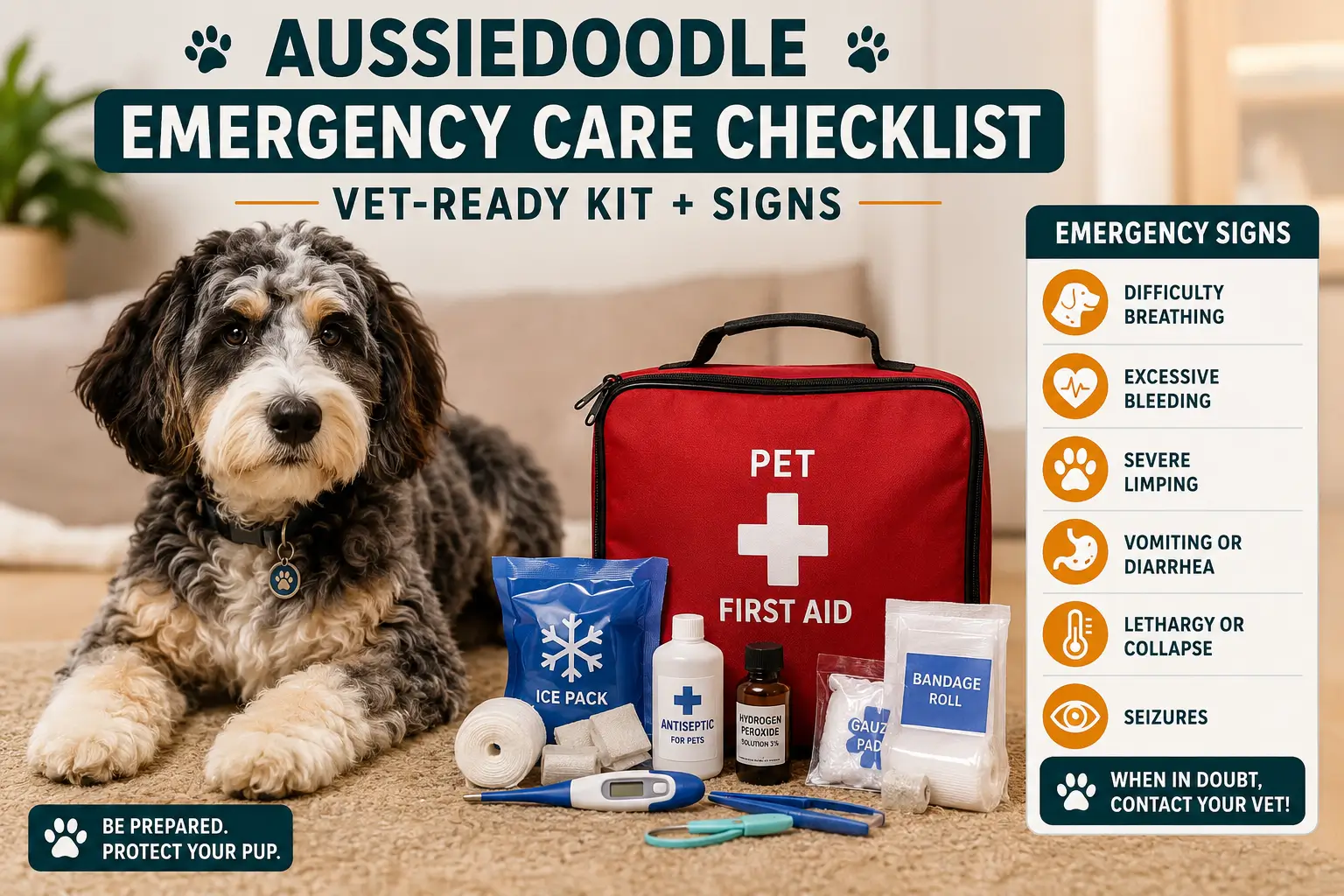
Aussiedoodle Emergency Care Checklist Vet-Ready Kit + Signs

Quick Answer: An Aussiedoodle emergency care checklist covers three things: knowing your dog’s normal vital signs, having a stocked first-aid kit with emergency contact numbers on hand, and knowing which symptoms mean “call now” versus “go now.” This matters most for Aussiedoodle owners because the breed’s Poodle lineage carries elevated bloat (GDV) risk and its … Read more

Aussie Poo Puppies: Care, Size, Cost & Personality

Aussie Poo Puppies Care, Size, Cost & Personality

Quick Answer: An Aussie Poo puppy is an Aussiedoodle — a cross between an Australian Shepherd and a Poodle — sold under an informal spelling of the same name. From a reputable breeder, prices typically run $1,200–$2,500, with premium litters reaching $3,500–$4,000. Adult size depends on the Poodle parent: Toy Aussie Poos stay around 12–25 … Read more

Aussiedoodle Hypoallergenic: Myths vs Facts

Aussiedoodle Hypoallergenic Myths vs Facts

Quick Answer: No dog is truly 100% hypoallergenic, including the Aussiedoodle — but Aussiedoodles that inherit a curly, Poodle-type coat shed far less loose hair and spread less dander around a home than an Australian Shepherd or most non-Poodle breeds, which is why many allergy sufferers tolerate them better. The effect depends on generation: F1B, … Read more

Adult Aussiedoodle: Best Size Chart, Care & Lifespan

Adult Aussiedoodle Size Chart, Care & Lifespan

Shortest Key Takeaway A fully grown adult Aussiedoodle weighs 25–70 pounds and stands 9–24 inches tall, depending on size type, reaches final height around 12 months, but doesn’t finish maturing behaviorally until 18–24 months. Quick Summary Adult Aussiedoodles come in three size categories — Toy, Miniature, and Standard — each with a different final weight … Read more

Aussiedoodle Health: Genetics, Wellness & Care Handbook

Aussiedoodle Health Genetics, Wellness & Care Handbook

Quick Answer Common Aussiedoodle health problems include hip and elbow dysplasia, PRA, von Willebrand Disease, hypothyroidism, Addison’s disease, and sebaceous adenitis. Risk is lower with OFA-screened, genetically tested parents. Regular vet checks and early monitoring can help detect problems before they become serious. Who this is for: Owners and prospective owners who want a clear, … Read more