Quick Answer
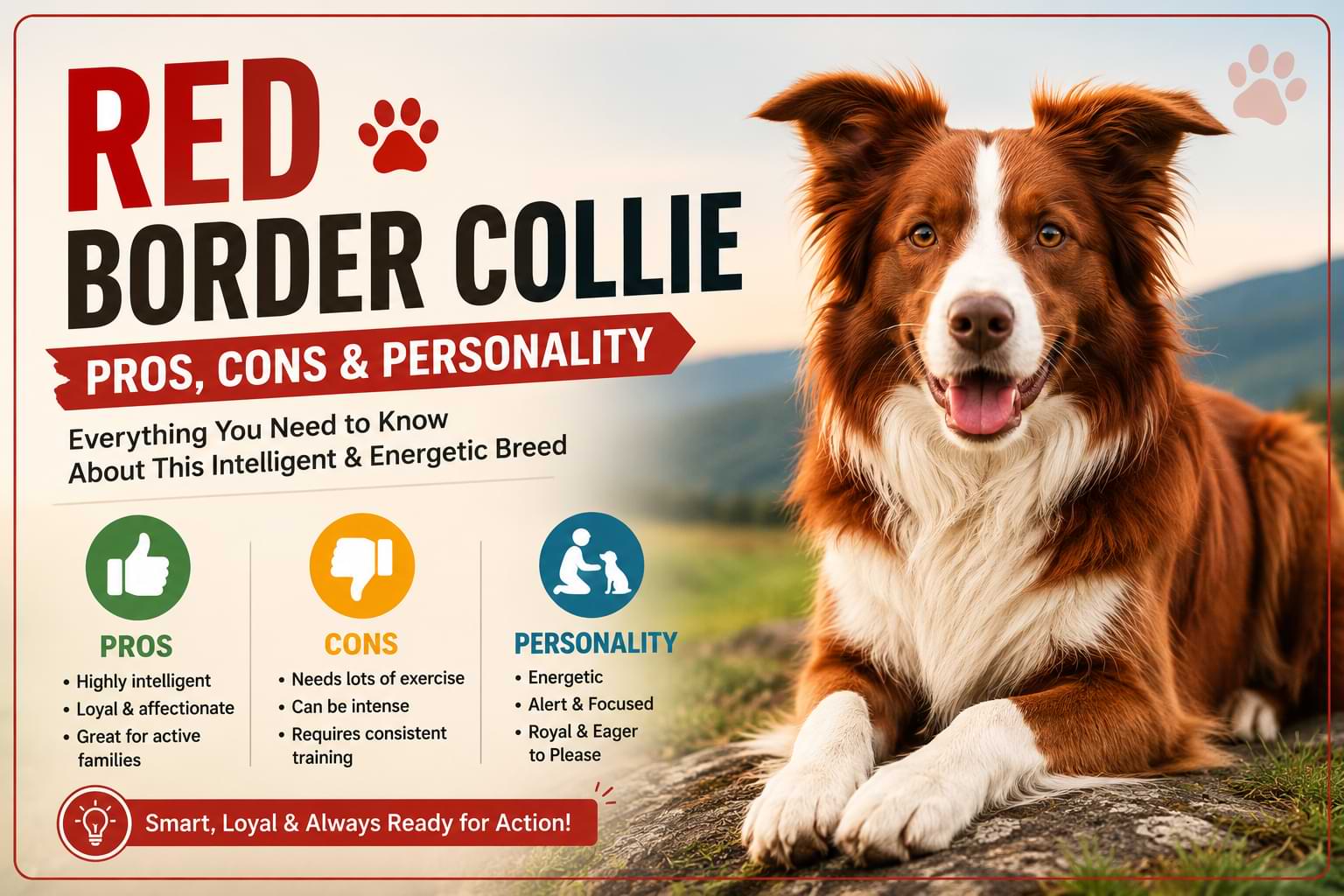
A Red Border Collie isn’t one single color — it’s the result of one of two different recessive gene pairings. A “true” red (also called chocolate or liver) comes from the B-locus, while an “Australian Red” or “Gold” Border Collie comes from the E-locus. Both are recognized by major kennel clubs, both are less common than black and white, and both cost more than a standard-colored puppy — typically $1,500–$4,000 USD depending on breeder, region, and pedigree.
Shortest key takeaway:
Red Border Collies are genetically recessive, moderately rare, and priced higher than black-and-white pups — but their temperament, exercise needs, and trainability are identical to any other Border Collie. Color doesn’t change the dog.:
- Red (chocolate/liver) Border Collie — B-locus recessive (bb), still carries the black-based (E) pigment gene, so the coat reads as a rich reddish-brown.
- Australian Red / Gold Border Collie — E-locus recessive (ee), the dog can’t produce black pigment at all, so the coat reads as golden/tan, not brown-red.
- Red Merle Border Collie — a red-based dog that also carries the merle gene, producing mottled patches. Covered fully in our [Border Collie & Aussiedoodle Colours & Appearance guide], not this article.
What Causes the Red Coat? (Genetics)
| Type | Genotype | What it means | Coat result |
|---|---|---|---|
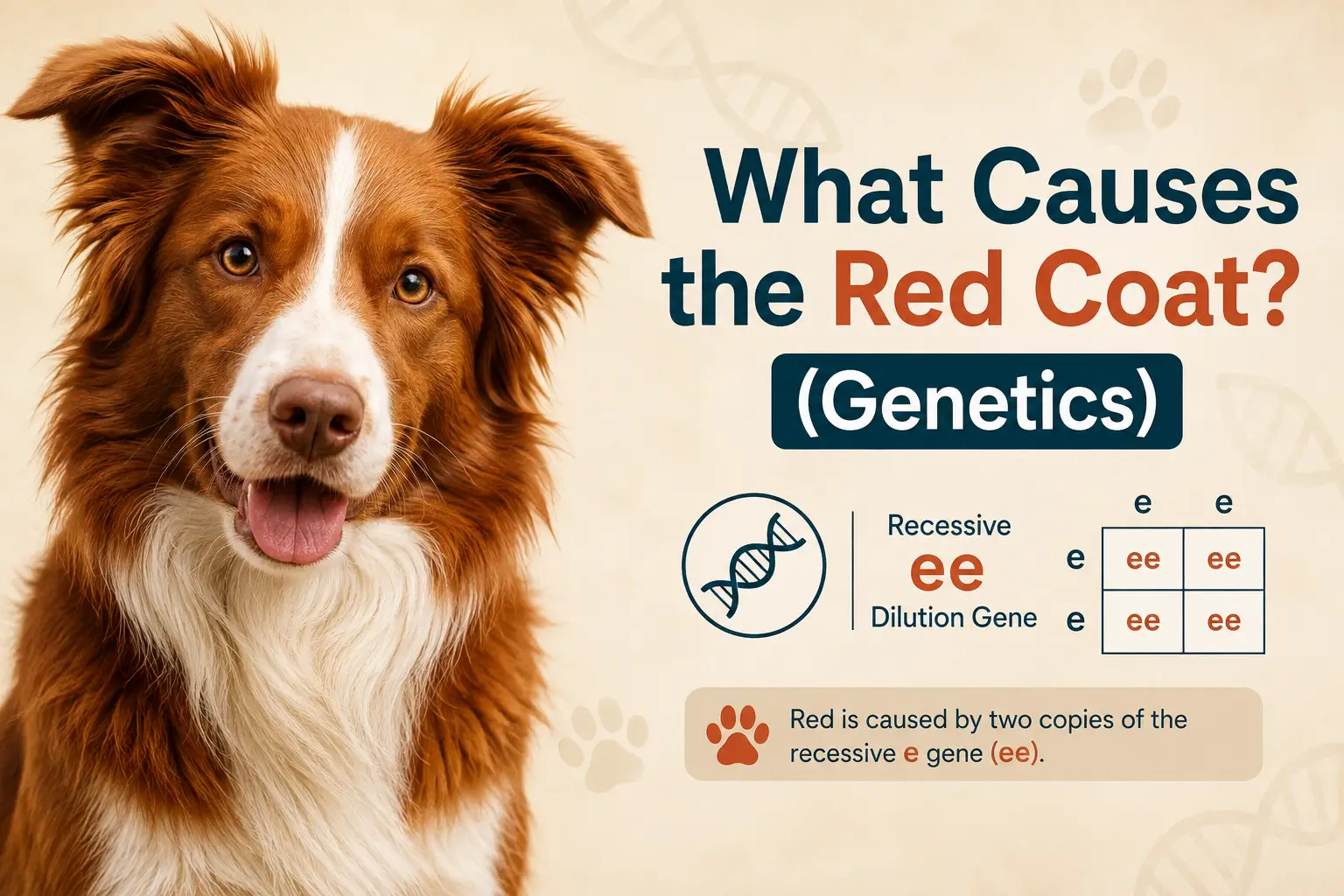
| Red / Chocolate / Liver | bb (B-locus) | Two copies of recessive brown allele; still makes black pigment genetically, but it’s diluted to brown | Deep reddish-brown, brown nose and eye rims |
| Australian Red / Gold | ee (E-locus) | Two copies of recessive extension allele; dog cannot produce black pigment (eumelanin) at all | Golden/tan coat, black nose usually retained |
Both parents must carry at least one copy of the relevant recessive gene for a puppy to be born red. That’s the core reason red Border Collies are less common than black and white: two visibly black-and-white parents can still produce a red puppy if both are silent carriers, which makes red litters hard to predict and harder to breed for on purpose.
Is Red a Recognized Color?
Yes. The American Kennel Club (AKC) and most breed standards list red, red and white, and red merle among the accepted Border Collie coat colors — it’s a variation, not a fault. What “rare” means here is relative: red shows up far less often in litters than black and white, but reputable breeders and rescues do place red puppies and adult dogs regularly.
How Rare Is a Red Border Collie, Really?
Red and white is considered the second most common Border Collie coloring after classic black and white, and has become noticeably more visible over the past decade.
Genuinely rare colors — lilac, slate merle, blue, brindle, solid white — sit well above red on the rarity scale, and lilac in particular is widely cited as the rarest standard-recognized color in the breed. If you’re specifically chasing rarity for its own sake, red isn’t the end of that road; lilac and blue merle are.
Temperament of a Red Border Collie
Coat color has no documented effect on Border Collie temperament — red dogs are the same breed, same drive, same working brain. That means:
- Extremely high exercise and mental stimulation needs — daily walks alone aren’t enough
- Fast learners, but they pick up bad habits just as fast without consistent structure
- Strong herding instinct that can show up as chasing, nipping at heels, or “eyeing” kids, cats, or cars if untrained
- Best suited to active households, working homes, or owners committed to daily training, agility, or scent work
If a listing or breeder claims red Border Collies are “calmer” or “better with kids” purely because of coat color, treat that as a sales claim, not a genetic fact — no coat-color gene is linked to temperament in this breed.
Price: What a Red Border Collie Actually Costs in 2026
Expect to pay more for a red coat than for standard black and white, for the simple reason that supply is lower and demand from color-driven buyers is high.
| Source | Typical price range |
|---|---|
| Reputable breeder, red or red and white | $1,500–$3,500 |
| Reputable breeder, red merle or rarer red-based patterns | $3,000–$5,000+ |
| Shelter or rescue | $300–$700 |
Price moves based on breeder reputation and health testing (hip and eye screening add cost but reduce risk), region, parent titles or working/herding lines, and how rare the specific pattern is — a plain red and white puppy will cost meaningfully less than a red merle from health-tested parents.
Red Border Collie vs. Red Aussiedoodle: A Quick Comparison
Since this question comes up often from readers researching both breeds, here’s the short version: a red Border Collie gets its color from B-locus or E-locus genetics inherited from purebred Border Collie lines. A red Aussiedoodle gets a similar-looking red or apricot coat from a mix of Poodle and Australian Shepherd color genetics, and typically sheds far less due to the Poodle coat type.
f you want the working-dog drive and classic herding-breed look in red, a Border Collie is the more direct route. If you want a lower-shedding, doodle-coated dog with a similar reddish tone, see our [Aussiedoodle Colors & Coat Patterns guide] for how red and apricot Aussiedoodles compare.
The Hardest Age for a Red Border Collie
Adolescence — roughly 5 to 18 months — is the stage most owners struggle with, and it’s identical across coat colors. This is when independence, testing of boundaries, and a spike in energy collide before training has fully “set.” Consistent structure, daily physical and mental outlets, and continued socialization through this window matter more than anything specific to the red coat itself.
FAQs
What is the rarest color of Border Collie?
Lilac is generally considered the rarest standard-recognized Border Collie color, followed closely by blue, slate merle, and brindle. Red and red and white are less common than black and white but are considerably easier to find than these rarer dilute and pattern colors.
Is a Border Collie a good dog?
Yes, for the right household — Border Collies are widely regarded as one of the most intelligent and trainable dog breeds, but that intelligence demands daily physical and mental work. They do best with active owners, farms, working roles, or dog sports like agility; they tend to struggle in low-stimulation homes.
What two dogs make a Border Collie?
A Border Collie is a purebred herding breed, not a mix — it isn’t “made” from two other breeds today. Its foundation traces back to landrace herding dogs of the England–Scotland border region, most famously the sire Old Hemp, whose working style shaped the modern breed standard.
What is the temperament of a red Border Collie?
A red Border Collie’s temperament is identical to any other coat color — high energy, highly intelligent, and strongly driven to work or herd. Coat color genetics and temperament genetics are separate systems in dogs, so red doesn’t make a Border Collie calmer, softer, or easier.
What is the most expensive Border Collie?
The rarest coat and pattern combinations — lilac merle, blue merle from health-tested working or champion lines — command the highest prices, sometimes reaching $5,000 or more. Red and red merle dogs sit in the upper-middle of the price range, above standard black and white but below the rarest dilute merle combinations.
Is a red Border Collie still worth it in 2026?
Yes, if the buyer understands the exercise and training commitment — the coat color adds cost and visual rarity but doesn’t change the breed’s needs. Buyers chasing a red coat purely for looks without matching the breed’s activity requirements often end up rehoming, so temperament fit matters more than color.
Red vs. Australian Red: how do I tell them apart before buying?
Ask the breeder which gene pairing produced the coat — B-locus (bb) reds have brown noses and eye rims, while E-locus (ee) Australian Reds usually keep a black nose with a gold/tan coat. Reputable breeders who health-test will know this distinction and can explain it; if they can’t, that’s a red flag for how carefully the litter was planned.