Quick Answer
Aussiedoodle for Adoption usually costs $80–$400 through a shelter or rescue, compared to $2,500–$5,000+ from a breeder. You apply through a shelter, an animal-welfare rescue, or a doodle-specific rescue group, complete a screening (application, reference check, meet-and-greet, sometimes a home visit), and typically bring your dog home within one to three weeks of approval.
Entity Disambiguation
“Adopting an Aussiedoodle” can mean three different things, and they’re not interchangeable:
- Shelter adoption — a municipal or nonprofit shelter that houses dogs of many breeds, including occasional Aussiedoodles and doodle mixes surrendered by owners or picked up as strays.
- Rescue adoption — a foster-based nonprofit, often multi-breed (“doodle rescue”) rather than Aussiedoodle-exclusive, that pulls dogs from shelters or takes owner surrenders directly.
- Breeder rehoming — an adult dog placed by a breeder (a returned puppy, a retired breeding dog) rather than sold as a new puppy. This is adoption in spirit but usually priced and screened more like a purchase.
This article focuses on the first two, since they’re what most people mean by “Aussiedoodle for adoption.”
Shortest Key Takeaway
Skip the breeder markup, expect an adult or adolescent dog rather than a young puppy, and apply through a doodle-savvy rescue for the best match.
Why Adopt an Aussiedoodle Instead of Buying One?
Aussiedoodles have grown fast in popularity since first being bred in the late 1990s and early 2000s, and that popularity has a side effect: more of them end up surrendered to shelters and multi-breed doodle rescues than most people expect. Adopting means:
- A dramatically lower upfront cost
- Often an adult or adolescent dog with a known temperament, rather than a puppy that’s still a personality unknown
- A dog that’s frequently already house-trained or partially trained
- One fewer dog competing for space in an already-strained shelter system
The tradeoff: fewer color, size, and coat-type options than buying from a breeder, and a shorter track record on health history.
Aussiedoodle Adoption Cost: Shelter vs. Rescue vs. Breeder
| Source | Typical cost | What’s usually included |
|---|---|---|
| Municipal shelter | $80–$180 | Spay/neuter, core vaccines, sometimes a microchip |
| Breed or doodle-specific rescue | $200–$450 | Spay/neuter, vaccines, microchip, veterinary exam, foster-home behavior notes |
| Reputable breeder (new puppy) | $2,500–$5,000+ | Health-tested parents, early vet care, contract — but not spay/neuter or the discount pricing of adoption |
| Breeder rehoming (adult/retired dog) | $500–$1,500 | Varies by breeder; sometimes closer to adoption pricing |
Rescue fees run higher than municipal shelters because they typically cover more veterinary work up front — dental care, treatment for anything the dog arrived with, and more thorough behavioral assessment during the foster period.
Where to Find an Aussiedoodle for Adoption
General listing platforms. Petfinder and Adopt-a-Pet aggregate adoptable dogs from thousands of shelters and rescues and let you filter specifically for Aussiedoodles or “poodle mix” in your area — the fastest way to see what’s currently available nationally.
Doodle-specific rescue organizations. Because there’s no large-scale Aussiedoodle-only rescue network, most doodle adoptions run through multi-breed poodle-mix rescues that place Labradoodles, Goldendoodles, Aussiedoodles, and Sheepadoodles together.
IDOG Rescue has placed more than 3,000 doodles since 2006, and groups like the Doodle Rescue Collective and regional organizations such as California Doodle Rescue and Doodle Rock Rescue (Dallas–Fort Worth) regularly have Aussiedoodles or Aussiedoodle mixes in their foster network. These groups tend to know doodle temperament and grooming needs better than a general shelter, which usually means a more accurate match.
Local shelters and animal control. Calling your municipal shelter directly and asking them to flag you if an Aussiedoodle-type dog comes in is a low-effort way to get ahead of the online listings, since many dogs are placed before they’re ever posted publicly.
How the Adoption Process Actually Works
- Search and shortlist. Filter Petfinder, Adopt-a-Pet, and any doodle rescue’s own site for available dogs in your radius — some rescues, like Doodle Rock Rescue, only place dogs within a set distance (350 miles, in their case) of their home base.
- Submit an application. Expect questions about your household, other pets, work schedule, fencing, and experience with active or herding-type breeds.
- Reference and background check. Many rescues call a veterinary or personal reference and some run a home visit or virtual home tour before approval.
- Meet-and-greet. You meet the dog, sometimes with your current pets present, to check compatibility before committing.
- Approval and fee. Once approved, you pay the adoption fee and sign an adoption contract, which usually includes a return policy if the placement doesn’t work out.
- Homecoming and vet visit. Schedule a veterinary visit within the first week or two to establish a baseline, even if the dog’s paperwork looks complete.
The full timeline, from application to homecoming, typically runs one to three weeks — longer if a rescue requires a home visit or has a waitlist for its screening process.
Red Flags to Watch For
- A “rescue” that lets you pay and pick up a dog the same day with no application at all
- No willingness to share the dog’s intake history or any veterinary records
- Adoption fees far above the ranges here with no clear justification
- Pressure to wire money before you’ve seen the dog in person or on a verified video call
What to Know Before You Adopt (Real Talk from Raising Aussiedoodles)
Having raised Aussiedoodles through multiple puppy-to-senior life cycles, the single biggest adjustment for adopters coming from a shelter or rescue dog isn’t the coat — it’s the energy and the brain. A rescue Aussiedoodle that looks calm during a 20-minute meet-and-greet at the shelter can be a completely different, much more driven dog once it settles into a home and its herding instincts kick in.
Ask the foster family or shelter staff specifically about the dog’s activity level and reaction to fast movement (kids running, bikes, other dogs) before you commit, not just its temperament in a quiet room.
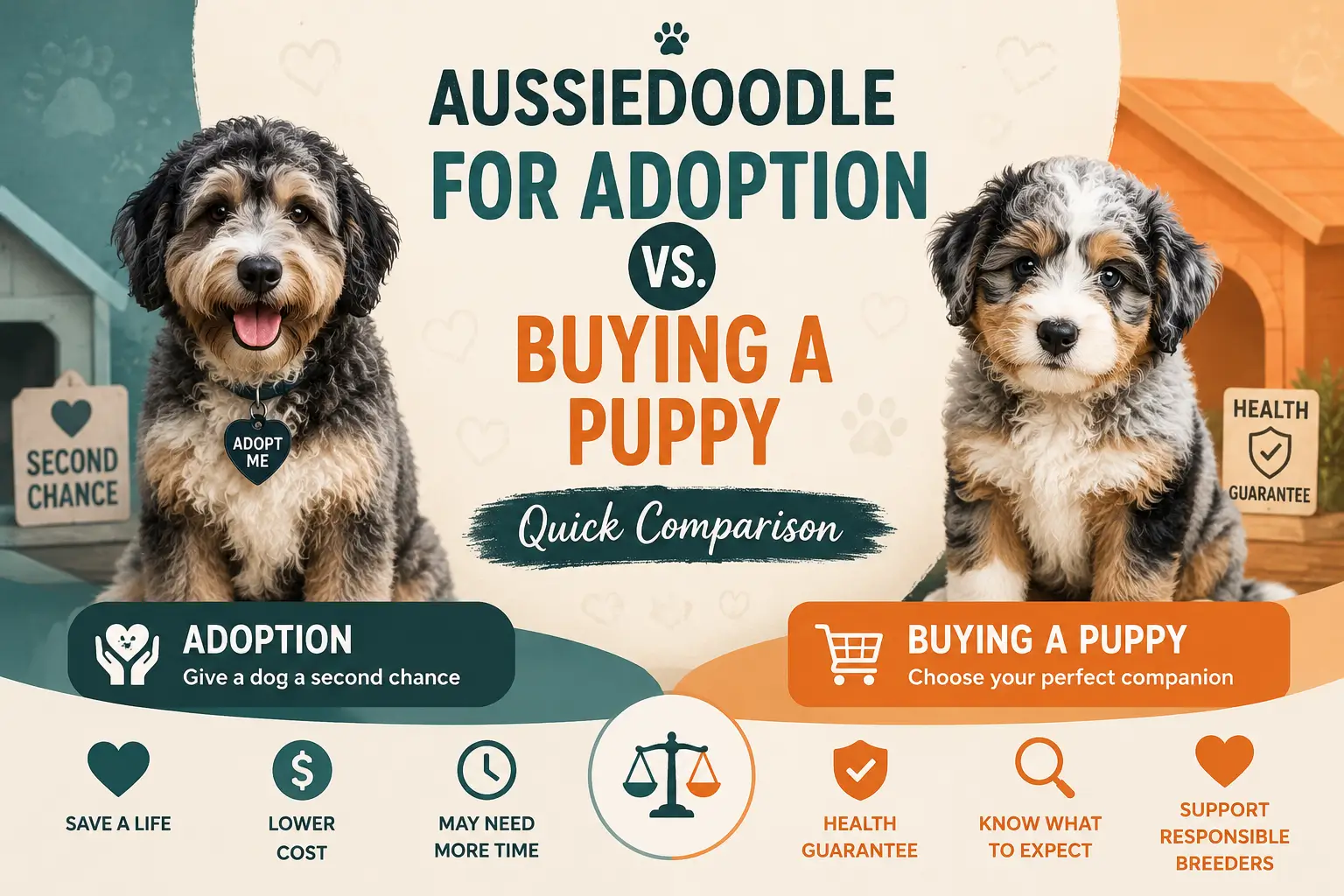
Aussiedoodle for Adoption vs. Buying a Puppy: Quick Comparison
| Adopting | Buying from a breeder | |
|---|---|---|
| Cost | $80–$450 | $2,500–$5,000+ |
| Age | Usually adolescent or adult | Puppy (8 weeks+) |
| Temperament | Often already known | Unknown until it develops |
| Color/size choice | Limited to what’s available | Wide selection |
| Health history | Sometimes incomplete | Documented health testing |
| Wait time | Days to a few weeks | Often a waitlist of months |
FAQs
What do I need to know about Aussiedoodles?
Aussiedoodles are high-energy, highly intelligent dogs bred from the Australian Shepherd and Poodle, and they need daily physical exercise plus mental stimulation — training games, puzzle toys, or a job to do — or they get bored and destructive.
Their coat, whether wavy or curly, needs brushing several times a week and professional grooming every 6–8 weeks to prevent matting.
What are the downsides of Aussiedoodles?
The main downsides are their exercise and mental-stimulation needs, a tendency toward separation anxiety if left alone too long, herding-style nipping or chasing behavior around kids and other pets if untrained, and grooming costs that add up over a dog’s lifetime.
They can also inherit health issues common to both parent breeds, including hip dysplasia and certain eye conditions.
Is an Aussiedoodle a good house dog?
Yes, with the right setup — Aussiedoodles do well indoors as long as they get enough daily exercise beforehand; without it, that same energy shows up as pacing, chewing, or barking inside the house. They tend to be affectionate, people-oriented dogs that want to be near their family rather than off on their own.
What is the best food for an Aussiedoodle?
A high-quality commercial dog food formulated for their size and activity level — typically a medium-breed, active-dog formula with real meat as the first ingredient — works well for most Aussiedoodles; puppies need a puppy-specific formula, and any diet change should happen gradually over 7–10 days to avoid stomach upset. Talk to your vet about the exact brand and portion size, since that depends on your individual dog’s weight, age, and activity level.
Is adopting an Aussiedoodle still worth it in 2026, given how popular the breed has become?
Yes — rising popularity has actually increased the number of Aussiedoodles showing up in shelters and doodle-specific rescues as owners realize the exercise and grooming commitment is more than they expected, which means more adoptable dogs and shorter waits than a few years ago.
Is it better to adopt an Aussiedoodle or buy one from a breeder?
Adopting is the better choice for most households — it costs a fraction of the price, often comes with a known adult temperament, and doesn’t add to breeder demand — but buying makes more sense if you specifically need documented health-tested parentage or a particular coat color and size that adoption listings can’t reliably provide.
How much should I budget for an Aussiedoodle adoption fee specifically?
Plan on $80–$180 through a municipal shelter or $200–$450 through a rescue, and budget separately for a post-adoption veterinary exam, since even a “fully vetted” dog from a foster home benefits from a baseline check with your own vet in the first two weeks.
Key Takeaways
- Adoption costs $80–$450 versus $2,500–$5,000+ from a breeder.
- Most Aussiedoodle adoptions run through multi-breed doodle rescues or general shelters, not breed-exclusive Aussiedoodle rescues.
- The process — application, reference check, meet-and-greet, approval — usually takes one to three weeks.
- Ask specifically about energy level and reaction to fast movement before committing, since a calm meet-and-greet doesn’t always predict home behavior.