Quick Answer:
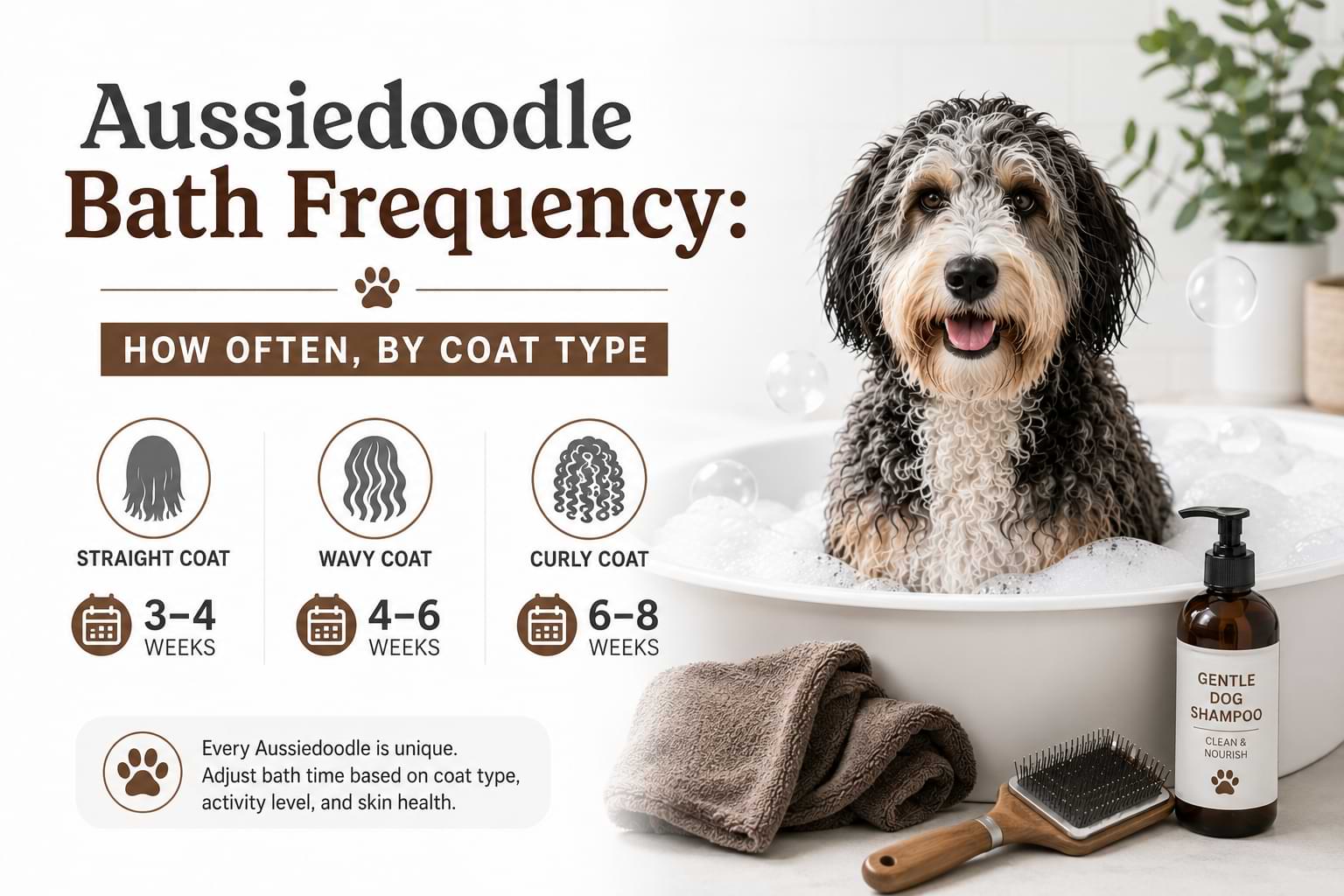
Most Aussiedoodles need a full bath every 4 to 6 weeks. Indoor, low-activity dogs can often stretch to 8 weeks; active, outdoor-heavy dogs may need one every 2 to 4 weeks. Bathing more often than that, without a medical reason, strips the natural oils an Aussiedoodle’s wavy-to-curly coat needs to stay healthy.
Bathing vs. Grooming vs. Brushing
These three terms get used interchangeably, but they’re not the same task, and mixing them up is why so many owners over- or under-bathe their dog:
- Bathing — washing the coat and skin with water and shampoo. This is the topic of this article.
- Grooming — the full-service package: bathing, haircut/trim, nail clipping, and ear cleaning, usually done together every 6–8 weeks.
- Brushing — dry mechanical detangling with a slicker brush or comb, done 3–4 times a week (daily for some coats). Brushing is what actually prevents mats; bathing does not replace it.
An Aussiedoodle can go two months between baths and still need brushing several times a week in between.
Quick Summary
| Factor | Recommended bath frequency |
|---|---|
| Indoor, low-activity adult | Every 6–8 weeks |
| Typical, moderately active adult | Every 4–6 weeks |
| Outdoor-heavy, swims/hikes often | Every 2–4 weeks |
| Puppy (under 12 weeks) | Sponge baths only, or one gentle full bath if needed; nothing weekly |
| Senior with dry or fragile skin | Every 6–8+ weeks, gentler shampoo |
| Diagnosed skin condition/allergy | As prescribed by your vet — sometimes 1–2x weekly with medicated shampoo |
Shortest key takeaway:
Bathe by your dog’s activity level and coat condition, not by a fixed calendar date — and when in doubt, bathe less, brush more.
Why an Aussiedoodle’s Coat Changes the Bathing Math?
Aussiedoodles inherit their coat texture mostly from the Poodle side — a single or loosely double layer of wavy to curly hair rather than the dense double coat of a purebred Australian Shepherd. That matters for bath frequency in two ways.
First, this coat type doesn’t have the heavy undercoat that traps dirt, dander, and odor the way a shedding double coat does, so Aussiedoodles generally need baths less often than breeds like Golden Retrievers or Huskies.
Second, curly and wavy coats hold moisture close to the skin after a bath, which means incomplete drying is a bigger matting and skin-irritation risk for an Aussiedoodle than the bath itself.
The generation your dog carries also plays a role: dogs with more Poodle influence (F1B, multigen) tend toward tighter curls and lower shedding, while F1 dogs with more Australian Shepherd influence can carry a looser wave and shed slightly more.
For a full breakdown of how coat genetics differ across generations, see our Aussiedoodle generations guide.
The Real Reason Overbathing Is a Problem
Every dog’s skin has a lipid barrier — a layer of natural oils, skin cells, and healthy bacteria that keeps skin hydrated and defends against irritation and infection. Ivan Ravera, a dermatology specialist at the Virginia Tech Veterinary Teaching Hospital, calls this barrier the skin’s primary defense system.
Frequent bathing, harsh shampoo, or incomplete rinsing wears that barrier down, which is what actually causes the dry, flaky, itchy skin owners blame on “bad genes” or “sensitive skin.”
Virginia Tech’s Veterinary Teaching Hospital notes that most healthy dogs do fine bathing anywhere from every 4 to 12 weeks, depending on coat type and lifestyle — which lines up closely with the tighter 4–6 week range that fits most Aussiedoodles specifically.
The American Society for the Prevention of Cruelty to Animals (ASPCA) sets a general baseline of once every three months for dogs overall, noting that dogs who spend more time outdoors or have skin issues need it more often. Katie Billmaier, DVM, a shelter veterinarian quoted by Chewy, puts the everyday rule simply: if your dog looks or smells like it needs a wash, that’s your cue.
Bath Frequency by Situation
| Situation | Suggested schedule | Why |
|---|---|---|
| Indoor apartment dog, short walks only | 6–8 weeks | Minimal dirt/oil buildup; skin barrier needs the extra recovery time |
| Active dog, daily park visits, some mud | 4–6 weeks | Balances visible dirt against oil-stripping risk |
| Swims regularly or plays in lakes/ponds | 2–4 weeks, or rinse-only after each swim | Chlorine and pond bacteria irritate skin faster than dirt alone |
| Puppy under 12 weeks | Spot-clean/sponge bath only | Skin barrier and immune system are still developing |
| Senior (8+ years) | 6–8+ weeks, moisturizing shampoo | Aging skin is thinner and slower to recover from stripping |
| Allergy-prone or diagnosed skin condition | Vet-directed, sometimes weekly with medicated shampoo | Medicated bathing treats the condition; it isn’t the same as routine bathing |
Signs Your Aussiedoodle Needs a Bath Sooner Than Planned!
- Visible dirt, mud, or a greasy feel to the coat
- A noticeable “doggy” odor that brushing doesn’t fix
- Rolling in something outdoors (the classic culprit)
- Fresh from a lake, pond, or ocean swim
- Flaky skin combined with an odor — this can also mean it’s time to see a vet, not just time for a bath
Signs You’re Bathing Too Often
- Dry, flaky, or dull-looking coat
- Increased scratching or visible redness right after baths
- Coat feels rough or “squeaky” instead of soft once dry
- You’re bathing on a fixed weekly schedule regardless of how the dog actually looks or smells
If these signs show up alongside real discomfort — redness, sores, or scratching that doesn’t let up — that’s a job for your veterinarian, not a shampoo swap. Ravera warns that washing already-irritated skin with the wrong products can worsen inflammation or spread infection.
You can run your dog’s symptoms through our Health Risk & Symptom Checker before deciding whether it’s a grooming issue or a vet-visit issue.
Puppy Bathing: Why “Less Is More” Actually Applies Here
Aussiedoodle puppies don’t need a bath on any set schedule in their first few months. Their skin barrier is still forming, and early over-bathing can make skin more reactive later on. Stick to sponge baths or spot-cleaning for muddy paws until your puppy is past the 12-week mark, and only give a full bath sooner if something genuinely needs washing off (something that could irritate skin or be toxic if licked).
When you do bathe a young puppy, use lukewarm water, a tear-free puppy shampoo, and dry them completely — a damp puppy coat in a curly-coated breed is exactly the setup that leads to early matting.
If you’re preparing to bring a puppy home, our Aussiedoodle adoption guide covers the full first-30-days checklist, bathing included.
Between-Bath Maintenance That Actually Extends the Schedule
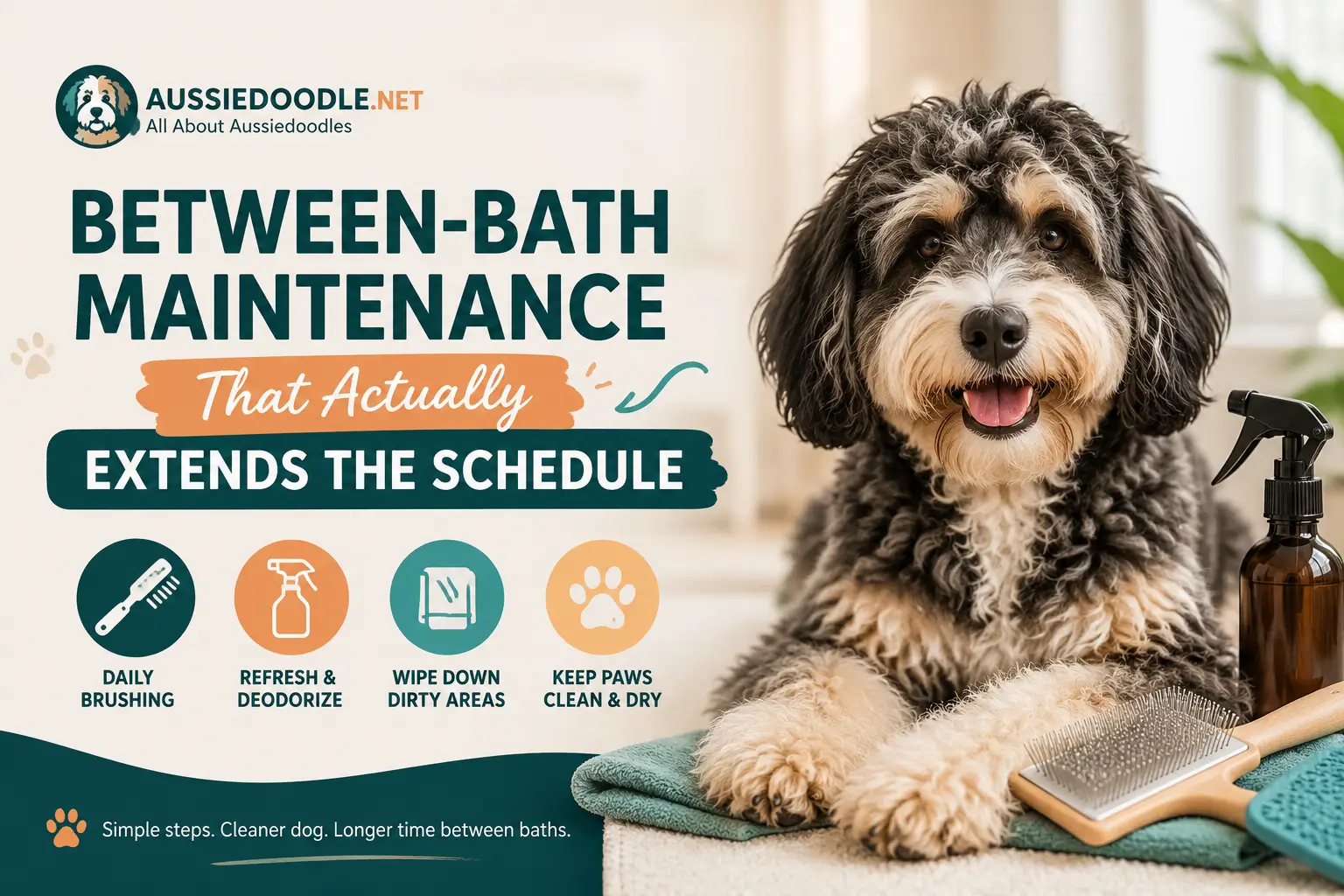
You can stretch bath frequency without letting your Aussiedoodle get dirty or smelly:
- Brush 3–4 times a week, down to the skin, with a slicker brush and metal comb — this redistributes natural oils and removes the surface dirt that would otherwise force an earlier bath.
- Use grooming wipes on paws, belly, and face between baths, especially after walks.
- Spot-clean with a damp cloth for small dirty patches instead of a full bath.
- Dry thoroughly after every bath or swim — pat dry, then finish with a low-heat dryer if needed. A curly coat that air-dries slowly stays damp near the skin, which is a matting and hot-spot risk.
How the Aussiedoodle Schedule Compares to Double-Coated Breeds?
| Coat type | Typical bath frequency | Why the difference |
|---|---|---|
| Aussiedoodle (wavy/curly, Poodle-influenced) | 4–6 weeks | Low-shedding coat doesn’t self-clean via shedding |
| Double-coated breed (e.g., Husky, Golden Retriever) | 4–12 weeks, brushing-led | Shedding naturally removes dead skin and debris, reducing the need to bathe |
| Short, single-coated breed (e.g., Boxer) | 4–8 weeks | Skin oils surface faster; odor appears before visible dirt |
The Takeaway:
A Husky owner who bathes every 8–12 weeks and relies on brushing isn’t doing it “wrong” for their breed — but that same schedule under-bathes an Aussiedoodle’s non-shedding coat, while an every-2-week schedule over-bathes it. The 4–6 week middle ground is where most Aussiedoodles land.
Key Takeaways
- Default schedule: every 4–6 weeks for a typical adult Aussiedoodle; adjust up or down based on activity level, not the calendar.
- Puppies: sponge-clean only until 12 weeks; skip routine full baths.
- Overbathing, not underbathing, is the more common mistake — it damages the skin barrier and causes the dryness and itching owners often misread as a coat problem.
- Brushing 3–4x a week does more to keep an Aussiedoodle clean between baths than an extra bath would.
- Redness, sores, or persistent itching are a vet issue, not a shampoo issue.
FAQs
Is it normal for my Aussiedoodle to smell between baths?
A very faint “dog smell” is normal; a strong or sour odor usually isn’t. If brushing and a wipe-down don’t fix it, the smell is more likely coming from ears, teeth, or a skin issue than from needing an earlier bath.
Is bathing my Aussiedoodle every 4–6 weeks still the right call in 2026, or has that advice changed?
It hasn’t changed. Veterinary dermatology guidance on skin-barrier health, including current recommendations from Virginia Tech’s Veterinary Teaching Hospital, still points to spacing baths out based on coat type and lifestyle rather than a fixed weekly routine.
How is bathing an Aussiedoodle different from bathing a purebred Australian Shepherd?
A purebred Australian Shepherd has a true double coat that sheds seasonally and self-cleans through that shedding, so owners typically bathe less often and brush more during shed season.
An Aussiedoodle’s Poodle-influenced coat doesn’t shed that way, so it needs the more consistent 4–6 week bath rhythm to stay clean.
What does professional grooming cost, and does that change how often I bathe at home?
Professional grooming (bath, trim, nails, ears together) typically runs every 6–8 weeks and costs more for standard-size dogs than minis. Many owners bathe at home between professional visits rather than skipping bathing entirely in between — a wash-and-dry at home is far cheaper than an extra groomer visit.
My Aussiedoodle just started scratching a lot after a bath — is that normal?
No — occasional post-bath scratching to “fluff off” is normal for a few seconds, but ongoing scratching, redness, or discomfort after bathing usually means the shampoo, water temperature, or rinsing wasn’t right for their skin. If it continues, it’s worth a vet check rather than switching shampoos repeatedly on your own.
Can I use human shampoo on my Aussiedoodle in a pinch?
No. Human shampoo is formulated for a different, more acidic skin pH than dogs have, and using it regularly is one of the more common causes of the dry, irritated skin owners mistake for a food allergy. Use a dog-specific shampoo every time.