Quick Answer:
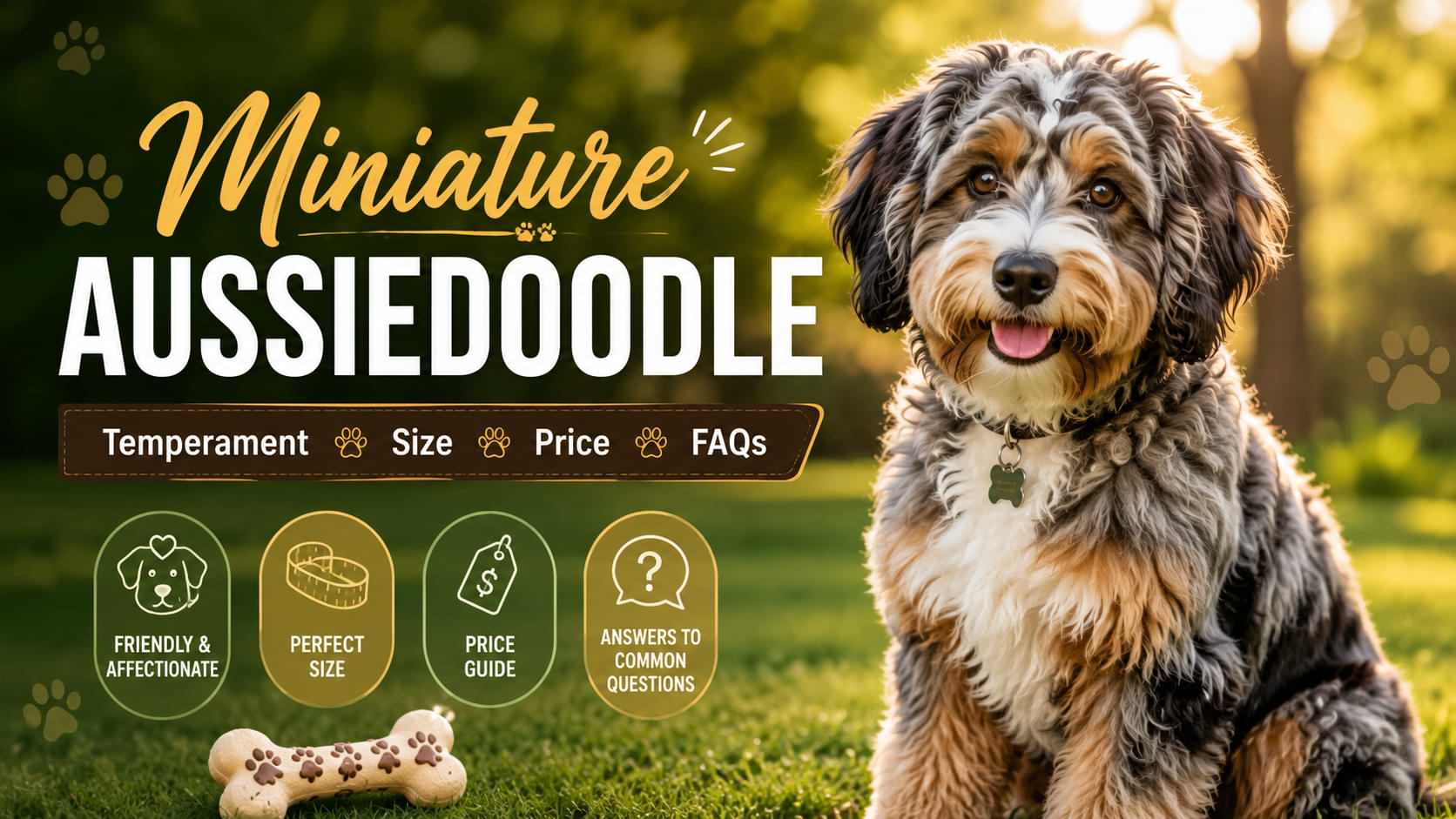
A Miniature Aussiedoodle is a Miniature (or Mini American) Shepherd × Miniature Poodle cross that stands 12–18 inches and weighs 15–35 lbs full-grown, costs $2,000–$4,500 from a health-tested breeder, and needs 45–60 minutes of daily exercise plus consistent training due to its herding intelligence.
Shortest Key Takeaway
A Miniature Aussiedoodle is a 15–35 lb, high-intelligence, high-bond companion dog that needs real daily exercise and training — not a low-maintenance lap dog.
Is a Mini Aussiedoodle the Same as a Miniature Aussiedoodle?
“Miniature Aussiedoodle” and “Mini Aussiedoodle” refer to the same dog. It is not the same as a Toy Aussiedoodle (10–20 lbs, bred with a Toy Poodle) or a Standard Aussiedoodle (up to 70 lbs, bred with a Standard Poodle). The parent breed is sometimes a Miniature Australian Shepherd and sometimes a Mini American Shepherd (the AKC-recognized name for the same dog) — either produces the same size class.
How Big Does a Miniature Aussiedoodle Get?
Full-grown, a Miniature Aussiedoodle typically reaches 12–18 inches at the shoulder and 15–35 lbs, with most landing in the 20–30 lb range. Final size depends mainly on the Miniature Poodle parent’s own size and the specific pairing a breeder uses, which is why the range is wide rather than a single number.
| Size Class | Adult Weight | Adult Height | Poodle Parent |
|---|---|---|---|
| Toy Aussiedoodle | 10–20 lbs | 10–14 in | Toy Poodle |
| Miniature Aussiedoodle | 15–35 lbs | 12–18 in | Miniature Poodle |
| Standard Aussiedoodle | 40–70 lbs | 18–23 in | Standard Poodle |
Most Minis reach full size by around 12 months old. Puppies bred from a Mini Aussiedoodle × Toy Poodle pairing (sometimes marketed as “Micro Mini” or “Toy”) can finish smaller, closer to 10–15 lbs, and may carry added size-related health considerations worth asking a breeder about directly.
Temperament: What Living With One Is Actually Like?
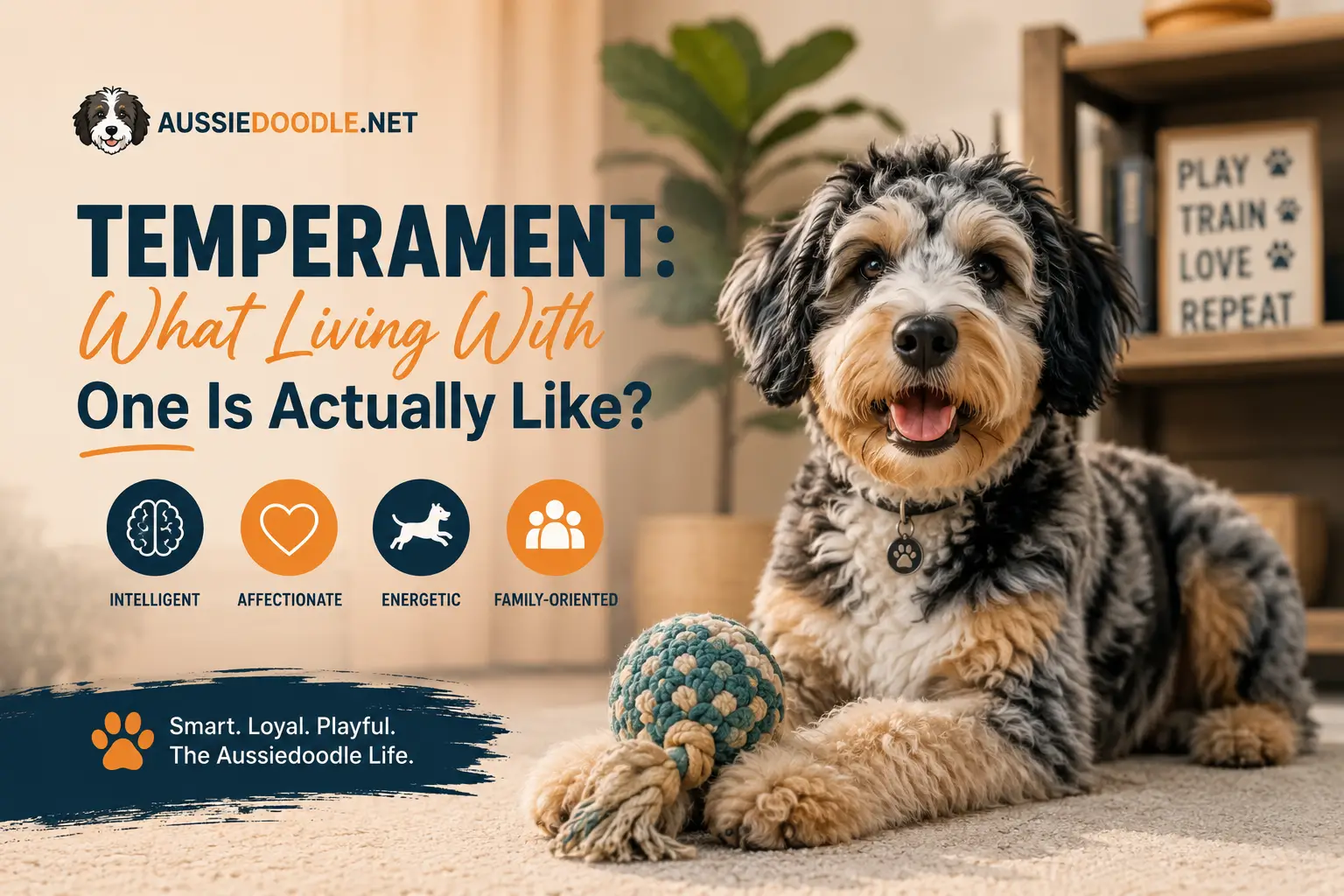
The Miniature Aussiedoodle inherits the Mini American Shepherd’s working drive along with the Poodle’s trainability, which produces a dog that is smart, people-bonded, and happiest with a job to do. In practice this means:
- High trainability — picks up obedience, agility, and trick work quickly, and genuinely wants the mental work.
- Strong handler bond — tends to follow owners room to room; can develop separation distress if routinely left alone for long stretches.
- Herding carryover — light nipping or circling around fast-moving kids or other pets is instinct, not aggression, and responds well to early redirection.
- Sensitivity to correction — harsh training methods backfire; reward-based training works far better with this cross.
This isn’t a low-maintenance companion breed with a small dog’s exercise needs — it’s a working-line temperament in a smaller body, and that mismatch is the single most common reason owners struggle with the breed.
Exercise & Apartment Fit
A Miniature Aussiedoodle that gets a genuine 45–60 minutes of exercise plus a short daily training session generally settles well in an apartment. The same dog given only a quick yard break, regardless of home size, is more likely to bark, chew, or herd household members out of unmet mental and physical need — apartment versus house is a smaller factor than actual daily activity level.
What Does a Miniature Aussiedoodle Cost?
Reported prices vary by source and region, but most reputable, health-tested breeders price Miniature Aussiedoodle puppies in the $2,000–$4,500 range, with health-tested litters from established programs more often landing near $2,500–$3,500. Listings well below that band are worth extra scrutiny — low prices are a common signal of skipped health testing or poor breeding practices, not simply a better deal.
Health Considerations
Like other Poodle-cross breeds, Miniature Aussiedoodles can inherit health risks from either parent line, including hip dysplasia, progressive retinal atrophy, and the MDR1 gene mutation common in herding breeds, which causes sensitivity to certain medications (including some anti-parasitic and sedative drugs).
Washington State University’s Veterinary Clinical Pharmacology Laboratory, which pioneered MDR1 testing, recommends screening any herding-breed cross before administering these drug classes. Ask any breeder for Embark or equivalent genetic panel results before committing to a puppy.
Miniature vs. Toy vs. Standard Aussiedoodle
| Factor | Toy | Miniature | Standard |
|---|---|---|---|
| Adult weight | 10–20 lbs | 15–35 lbs | 40–70 lbs |
| Best for | Small apartments, low-impact households | Most homes, families, apartments with real exercise routine | Active families, houses with yards |
| Temperament intensity | Same drive, smaller frame | Same drive, most common size | Same drive, more physical output needed |
| Typical price | Often higher than Mini | $2,000–$4,500 | Often comparable to or slightly above Mini |
Key Takeaways
- Miniature Aussiedoodles weigh 15–35 lbs and stand 12–18 inches at maturity.
- Expect to pay $2,000–$4,500 for a health-tested puppy from a reputable breeder.
- Temperament is high-drive and handler-bonded, not a low-maintenance small-dog personality.
- 45–60 minutes of daily exercise matters more to behavior than home size.
- Ask for MDR1 and genetic panel results before buying.
FAQs
Is a Miniature Aussiedoodle good for first-time dog owners?
It can work for a first-time owner who is active and committed to daily training, but the breed’s intelligence and herding instinct make it harder to manage than a typical low-energy small breed.
Are Miniature Aussiedoodles hypoallergenic?
No dog is fully hypoallergenic, but their Poodle-derived low-shedding coat produces less loose hair and dander than the Australian Shepherd parent, which is why they’re marketed toward allergy-sensitive households.
How is a Miniature Aussiedoodle different from a Mini Aussiedoodle?
They’re the same dog — “Mini” and “Miniature” are used interchangeably by breeders and registries.
Do Miniature Aussiedoodles bark a lot?
They can, especially when under-exercised or left alone for long periods; barking is usually a symptom of unmet activity or attention needs rather than a fixed trait.
What’s the hardest part of owning a Miniature Aussiedoodle?
Most owners report the training and exercise commitment as the biggest adjustment — this is a working-intelligence dog in a small-dog body, and skipping structure leads to herding, nipping, or anxiety behaviors.